

290 AD: A girl is born in Mérida, Roman Hispania, in what is now western Spain. Her name, Eulalia, is Greek for “well-spoken” or “beautiful of speech.”
304 AD: During the persecutions of Diocletian, the adolescent Eulalia defies Roman authorities, publicly professes Christianity, and is tortured to death at thirteen years of age. She is subsequently venerated as Saint Eulalia of Mérida.
Late 4th century: The poet Prudentius celebrates Eulalia’s martyrdom in his Peristephanon, transforming the young martyr into a literary heroine. Her name thus begins a long passage through European Christian culture, carrying associations of beautiful speech, feminine courage, and devotion beyond death.
7th century: In Arabia, the love of Qays ibn al-Mulawwah for Layla al-Amiriyya becomes the subject of a celebrated romantic tradition. Denied marriage to his beloved, Qays acquires the name Majnun, meaning “madman” or “possessed.” Layla’s name, written ليلى in Arabic, derives from the root l-y-l (ليل), meaning “night,” and connotes the beauty of darkness and the hours of longing.
Circa 880: Monks at the Abbey of Saint-Amand in northern France compose the Sequence of Saint Eulalia, one of the earliest surviving literary texts in a Romance language and among the fundaments of French literature. The Spanish martyr’s name passes into the developing French vernacular as Eulalie.
1188: Persian poet Nizami Ganjavi completes Layla and Majnun, transforming the older Arabic tradition into an elaborate romance of longing, separation, poetry, and death. The lovers become immortal through the impossibility of their union. Their story travels across Persia, Central Asia, India, and the Islamic world, acquiring mystical interpretations in which earthly longing becomes an image of the soul’s yearning for God.
1427–1437: Catalan painter Bernat Martorell creates an altarpiece depicting the sufferings of Saint Eulalia of Barcelona, a second early Christian martyr with the same name and a remarkably similar backstory. Eulalia subsequently becomes embedded in Catalan civic and religious identity, with churches, artworks, local traditions, and public spaces preserving her memory.
1788: Sir William Jones publishes a Persian edition of Abdullah Hatefi’s Layla and Majnun in Calcutta. Jones’s Orientalist scholarship helps introduce the romance to English-speaking literary circles. Isaac D’Israeli, father of the future British prime minister Benjamin Disraeli, subsequently adapts the story for English readers.
Early 19th century: The Layla–Majnun romance acquires new European audiences through Orientalist translations, adaptations, and theatrical works. William Reeve’s opera Kais, or Love in the Deserts, based on D’Israeli’s adaptation, brings the story into London theatrical culture.
1836: James Atkinson publishes an abridged English verse translation of Layla and Majnun. The medieval lovers are now accessible to English readers in a form that will help preserve their story through the Victorian period and beyond.
1837: Scholars rediscover the medieval Sequence of Saint Eulalia in a manuscript at Valenciennes. The poem’s importance to the origins of French literature brings the ancient name renewed attention within European literary scholarship.
1845: Edgar Allan Poe publishes Eulalie in The American Review: A Whig Journal. Poe’s poem celebrates the arrival of a beloved woman who redeems the narrator from solitude and despair. His Eulalie becomes a bride, and romantic longing finds its apparent resolution in marriage. The poem invokes Astarte, the ancient Near Eastern goddess associated with love and the evening star.
1854: Eulalie Way is born in Georgia, nine years after Poe’s poem.
Late 1860s: Jacob Summerlin, the wealthy North Florida cattleman and Confederate war provisioner known as the “King of the Crackers,” moves his family to Georgia so his preteen sons Robert and Samuel can receive a better education. In the 1870 census they appear only a few households apart from 16-year-old Eulalie “Eula” Way.
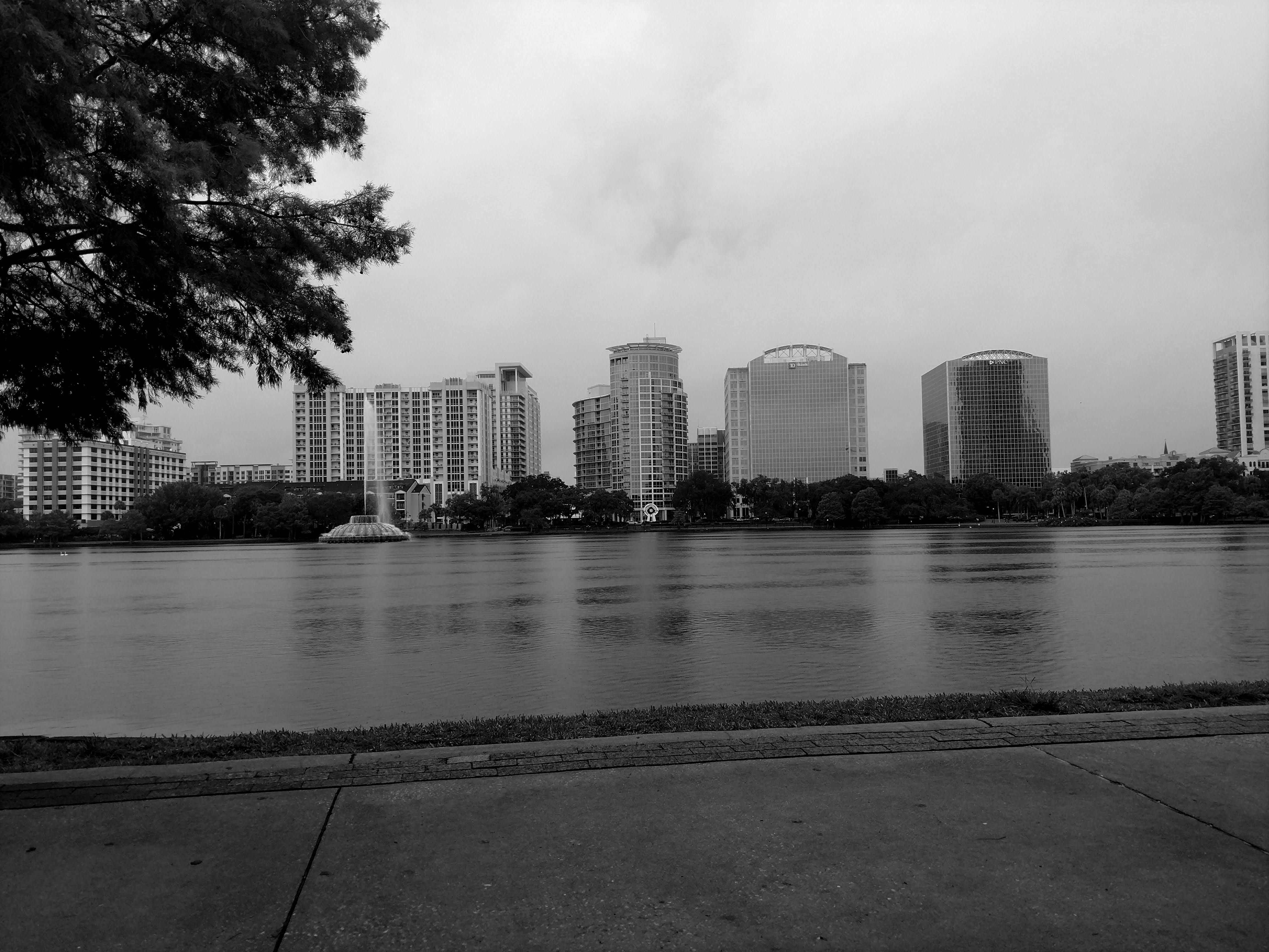
1873: Jacob Summerlin moves his family to Orlando, purchasing 200 acres around a flooded sinkhole the locals call “Sandy Beach,” which is a popular swimming spot for local children. His 1874 land plat later identifies the body of water as Lake Eola.
1876: Robert Summerlin marries Texas Parker, a local socialite from a prominent Central Florida dynasty and thus an exquisite political match.
1880: Robert Summerlin—now either 22 or 27 depending on which records you take as definitive—becomes mayor of Orlando, still a tiny Florida frontier town. He resides in a house overlooking Lake Eola, whose name subsequent generations will remember as commemorating a lost fiancée that perished prematurely from typhoid fever. The real Eulalie Way persists another two decades in Georgia.
1883: The Summerlin family donates Lake Eola and surrounding land to Orlando, stipulating that the city maintain it as a public park, plant trees, and establish a path around the water. It subsequently becomes the center of Downtown Orlando.
1885: Robert Summerlin divorces Texas Parker and moves to Texas to raise their two daughters Maude and Ruby as a single father.
1888: The City of Orlando officially recognizes Lake Eola as a public park.
1895: Eulalie’s cousin Samuel Yulee Way—a distant relative of Judah P. Benjamin through his Sephardic mother—marries Emma DeLaney, from a prominent Orlando family, having relocated to Central Florida sometime in the 1880s or early 1890s. He begins to ascend in local politics.
1896: Eulalie Way dies unmarried at forty-two.
1926: Robert Summerlin dies in California.
1932: Samuel Yulee Way is elected Mayor of Orlando, serving until 1935 and then again from 1938-1941.
1930s: Robert’s brother Samuel Summerlin—now himself a prosperous cattleman—is interviewed by Jacksonville historian Dena Snodgrass and testifies that Eola was “a friend” of both of the brothers and “not a sweetheart.”
1938: Kena Fries’s history of Orlando—released during Sam Way’s second mayoral term—formalizes the story that Robert Summerlin named Lake Eola after a beautiful fiancée who died of typhoid fever shortly before their wedding. Thus historical uncertainties disappear into a sentimental origin myth: the girl becomes a Lost Lenore, the lake a monument to bereavement, and Robert a grieving lover whose fidelity is permanently written into the geography of the City Beautiful.
1970: Eric Clapton, performing with Derek and the Dominos, records Layla, deriving its title and romantic myth from the medieval story of Layla and Majnun. Clapton is at this point in love with Pattie Boyd, the wife of his friend George Harrison.
1979: Eric Clapton marries Pattie Boyd.
1989: Eric Clapton divorces Pattie Boyd.
2004: A girl is conceived in Jacksonville while Eric Clapton’s Layla is playing.
2005: The girl is born and christened “Layla” after the song.
2006: In Galena, Illinois, Leila Anwar establishes the Euleila Poetry Awards, a student poetry competition whose name combines her own Arabic-derived name, Leila (“night”), with Eulalie, the Greek-derived name meaning “sweetly speaking.”
2024: The Layla born in 2005 is now a precocious teenage poetess, and begins to take off as a literary microceleb on Substack dot com.
2025: Two men involved in a love triangle with Layla—both of them also Substack microcelebs—have lunch together on the shores of Lake Eola. History is made.
You know Walt, I remember Kryptogal straight up say that the real proof that you aren't a misogynist in practice is that you never actually wrote the girls you interacted with as just flesh body and pussy. You always wrote them as a person despite everything
This is what I like about you, Mr. Bismarck