

Almost no one changes their mind through reasoned debate.
Peepo approach the world and others through internally opaque precognitive assessments of threat, status, relational alignment, ability to impose consequences, reputational valence, and equilibriative normality, all of which endogenously shape the formation of sincere preference and sensibility.
Affect and conation enter and leave the room long before cognition has a chance to put on some elaborate Cartesian musical about “beliefs,” “ideas,” or “values.”
Still, most people are hardly solipsists.
So: how does opinion change ackshully happen?
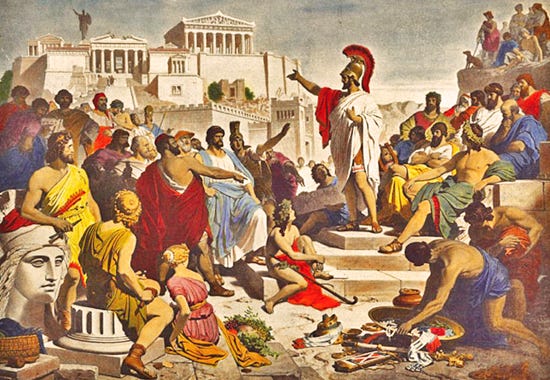
It begins with what I call The Other Gap: the observation that all other minds are on some level unknowable and inscrutable, and that conative alignment is never 100%.
It can come astonishingly close with a parent or child or woman you’ve built a life with or buddy involved in the same personally salient mission—but it never gets there entirely, and there are always moments of disgust or alienation one needs to work through upon realizing that you’re literally just different people who are deriving qualitatively and quantitatively asymmetric value from the dyad.
Thus all human interaction is “transactional” in the thin and tautological sense that all conation even when altruistically oriented carries some psychic, reputational, or coalitional payoff structure—and no, that doesn’t make your wife a hooker and best friend a Nashian mercenary. Some transactions and alliance structures are a lot more mediated and less fungible than others, which facilitates an endogenous process of precognitive ritualization and individuation that deepens adaptive sincerity and enables long-horizon trust in repeat-game ecologies.
It’s just never 100%.
Your girlfriend thinks that fetish is weird but goes along with it to make you happy. Your husband thinks your book is kind of retarded, but never says anything because he doesn’t take women seriously either way. You think your best bro is coping about his fat Asian girlfriend, and he thinks you’re coping about your shitty low-wage slave job, and there are certain conversations you learn never to have with your parents.
If we let those things matter too much we’d never be happy or get anything done.
And if we never let them matter at all we’d all feel radically misunderstood.
Thankfully man has several technologies at his disposal for traversing the Other Gap and changing others’ opinions.
The first is sovereign writ. If you chain a woman to your radiator or tell a man you’ll break his legs if he repudiates a debt they’ll generally come to see your own sovereign preference-set and desires as Good and anyone who criticizes you as deluded / cringe through paleolithic war bride and Marius-Sulla dynamics (in The Orange Book I call this the Strong Horse Effect and Gluestick Corollary). In its strongest variant this approach consists mostly in direct physical coercion, with material provisioning and hard institutional power constituting more mediated and higher-order forms.
The second is presumptive dignity: erotically viable women and men a sovereign finds useful naturally accrue a certain intersubjectively recognized right to be Comfortable and have their tastes taken seriously, and anyone who challenges that right naturally reads as degraded and low-status, consigning himself to an impotent petitionary bind. Women and high-status male adjudicative nodes can thus deploy ample photonegative and interpretive power upon low-status petitionary actors, usually also making their target seem like the aggressor and sincerely experiencing him as such.
Preferences then form endogenously around such modalities, with petitionary actors deriving a sense of dignity from the idea that they sincerely believe in an institution’s mission or charismatic sovereign’s agenda—that or notions of heroically protecting some embattled photonegative node.
Meanwhile there exist three important technologies mostly orthogonal to the sovereign/photonegative/petitionary plane.
The first is religion; man craves ritual, transcendence, meaningful sacrifice, and bounded self-abnegation, all of which facilitate escape from hedonic capture, otherwise intractable collective action problems, and maladaptive feedback loops.
The second is art, which allows men with unusually high interpretive or affective bandwidth to ontologically colonize their peers and surrounding ecologies by giving them selective access to a half-conscious mythic dreamscape where the propositional foreskin is pulled back and motivation becomes a lot more plastic and contradictory.
Then finally we have rhetoric, which alters the interpretive superstructure itself.
Rhetoric at its core is about getting other peepo to adopt your frames, categories, unstated assumptions, and inferential tendencies.
Outside of Trigonometry class nobody is ever “right” in any objective Archimedean sense independent of minds and situated criteria of consequence, as all categories are authored compressions and all human minds deeply limited in both their ability to sensorily apprehend the external world—think illusions, mirage, and hallucination—and to recall things with perfect reconstructive accuracy, while even things like salience and attention are ultimately situated and perspectival.
The goal of rhetoric is to make your own compressions phenomenologically undeniable.
To that end the only criterion of consequence is the Writ of Nature, which itself never arrives with propositional truth conditions; scope, resolution, and the relative weight of correspondence-truth versus operative purchase is always contextual, except to the extent precedent and equilibria inform future conditions.
Sometimes the right map is the one that lets you build the bridge across the valley; at other times it’s the one that lets you incinerate the enemy encampment. Context-independent rules exist purely for repeat-game coordination.
One way to look at rhetoric, then, is through the lens of Mythopoetic Hobbesianism—the idea that precisely all human interchange is a discursive war of All Against All in which actors try with varying degrees of conscious intent to gaslight interlocutors into accepting a framework congenial to their own interests.
That needn’t be manipulative, predatory, parasitic, or elsewise extractive.
A lot of times it is.
Sometimes though it just means producing an interpretive schema that breaks up sclerotic extant coalitions or revitalizes an infertile self-esteem structure.
At the end of the day everything is about status.
I don’t mean that in the thin sense of coercive dominance hierarchies and positional social rank a la Perez Hilton/Mad Max, but rather in the thick holistic sense of “what’s your status?”, e.g. whom are you presently aligned with, what are you ackshully capable of producing, and what do your peers infer somatically about your ability to impose consequence directly or indirectly, act independently of moral judgment, cheaply procure attention / alliance / financial and erotic opportunities, and so on.
By definition precisely no human action, thought, or utterance escapes that field.
The midwit response to this idea is that I’m begging the question and removing too much discriminatory purchase by collapsing all motivation into status, but such an account itself begs the question by assuming motivation is exogenous or thickly volitional; conative precognitivism vs volitional libertarianism is plainly just a hermeneutic question of which resolution is more contextually useful, with the latter working better on a therapeutic / individual-adjudicative basis optimized around maximizing personal agency and the former dominating on any sociological or public policy level where the object is to causally sculpt behavior at scale, in which case it’s a lot more efficacious generally to model human conation like that of a roomba.
So with all that being said let’s examine how specifically rhetoric works at both the individual and collective level.
For individuals it’s largely all about the Copestory: the narrative that explains why your interlocutor’s station in life is dignified, why he’s smart/smexy/coo, why everyone who doubts him is a hater and everyone who resents him nought but a jealous faggot, and why he himself is ackshully being unfairly put upon by some malignant third party.
Most people’s Copestories are internally sincere and basically correct at their native scope and resolution; they vary enormously in vitality—think the extent to which they facilitate psychological momentum and productive forward movement—as well as corrigibility under the Writ of Nature.
Note corrigibility is a prospective analytic property whereas vitality is something that can only be accounted for post-hoc—which of course means that the least corrigible Copestories are simultaneously the most and least vital, and there’s no way to find out which it is until you’re well past the Schrödinger’s Cope stage and either high on your own solipsistic Boomerish survivorship bias or languishing in the copium den.
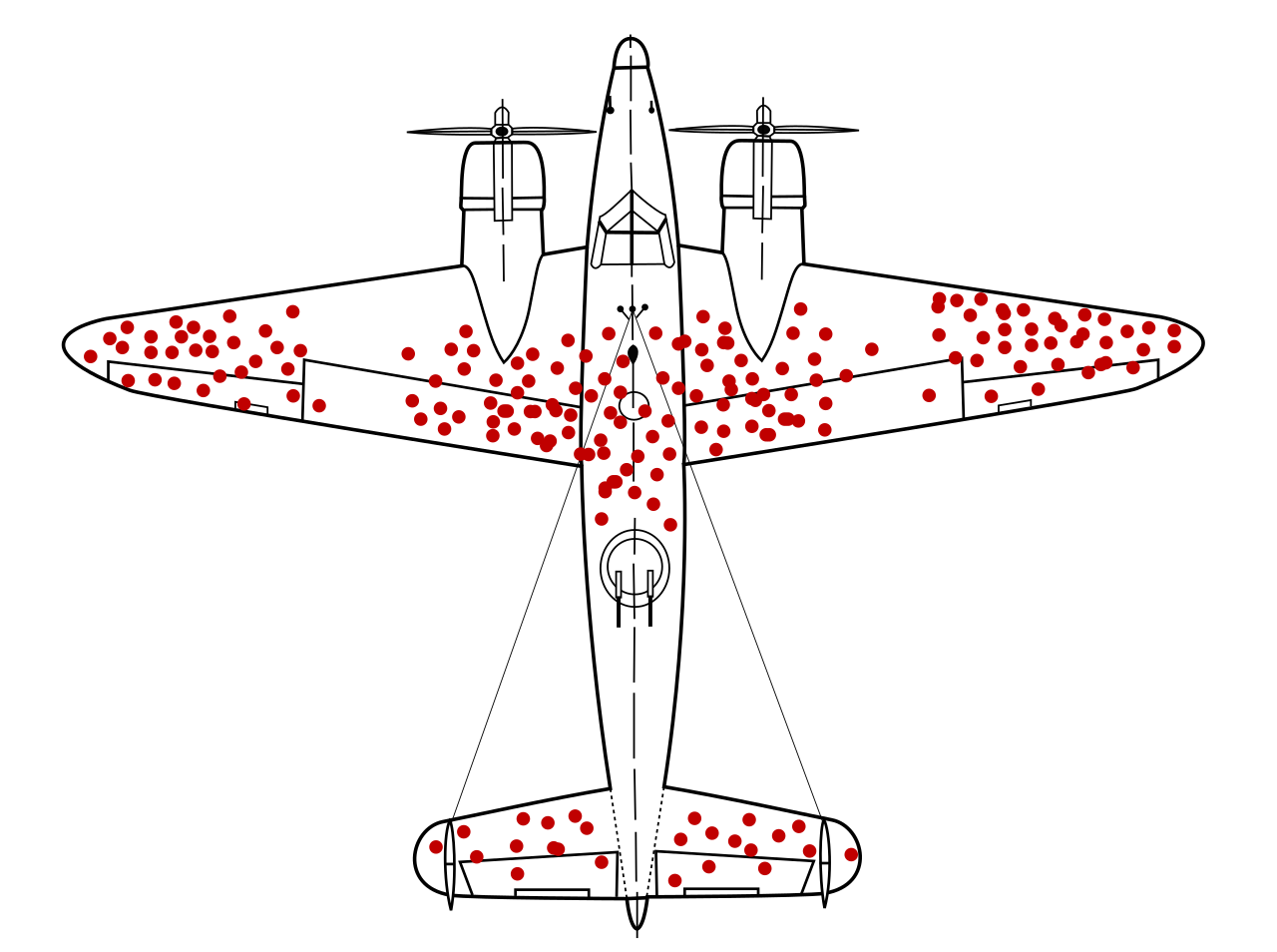
Suffice it to say Wally B has been on both sides of that dynamic more times than he can count, as has any especially high variance or status-elastic man.
The key is probably to develop various iterative discriminatory tactics and barbell strategies to optimize both confidence under pressure and useful corrigibility—but that’s a subject for another essay.
The point is precisely every human being you talk to is at his core a roomba running off an elaborate bundle of motivated reasoning, sincerely-felt delusion, self-interested post-hoc moralization / aestheticization, and status-calibrated grievance.
The key to moving someone is accurately modeling that bundle and empathetically addressing the human bean that arises from it.
When litigating any proposition X with a man first ask yourself these questions:
What does it mean for his own status, competence, and desirability if X is true?
What does it mean for the same if the man or archetype saying X is allowed to be right, or if the proposition’s native coalition turns out to have merit?
What does it mean for his own sense of moral certainty and normative swagger if his own sensibilities toward X turn out to be provisional or situated rather than etched as Platonic source code in the underlying fabric of the cosmos?
Does X make it easier or harder to think of himself as inhabiting a dignified position with his woman, children, friends, peers, and colleagues?
Does X make it easier or harder for him to feel justified in dehumanizing rivals?
Does X increase or decrease the cognitive load associated with already-ritualized habits, tendencies, and predilections?
All of these things matter infinitely more to whether or not X seems “true” or “right” to him than whether it empirically maps the territory with greater explanatory or predictive purchase than rival models.
That will be a bit less true if he’s an autistic white guy born in the 80s or 90s, because some social archetypes genuinely are materially more correspondence-driven than others, whether it’s because the Writ of Nature exposes them to greater attributed authorship for their actions or because they were reared in a hypertextualist info ecology that bizarrely fetishized context-independent correspondent truth as such.
These days the feed updates far too fast and society is far too liquid and frictionless for receipts or heuristic precision to matter all that much; operatively we’re living under a regime of post-textualist epistemics where all that matters is immediate legibility to algo-brained feedgroids, mnemonic torque, mimetic penetration, and semiotic bandwidth. Talking about “facts” as such in the Zoomer Oral Culture is ridiculously pedestrian and mostly only useful to the extent it lets you launder felt status coding and second order implication as correspondent truth like a woman.
Thus if you want to move a man you need to spin a version of reality that gives him a pathway to dignity and positional superiority—and yes, it has to be superiority, because in the aggregate status is zero-sum which means any positive sum dyadic exchange via arbitrage or immunization definitionally extracts status from the field—by narratively exalting his strengths and minimizing his defects while framing some adversarial archetype as pathetic, deluded, weak, coping, cringe, predatory, parasitic, resentful, vindictive, aggressive, and so on in a way that mobilizes his self-interested conation towards your own ends.
Again, this needn’t be extractive or hostile per se—though it pretty obviously can be, and to whatever extent it is we can call it Manipulation.
Most of the time though this happens organically, intersectionally, and without any particular conscious intent through felt affiliative somatic cues experienced internally as earnest friendship, erotic integration, or moralistic / aestheticized coalition-building.
As rhetoric scales past the individual to some wider audience—whether that’s a small friend group at a party or an email list comprising thousands of loyal Waltheads like yourself—it also grows more deliberate, abstracted, and typological.
Effective persuasion at the group level, which we’ll call propaganda (non-pejoratively, mind, Wally B himself having made his bones as a propagandist), differs from art to whatever extent it has some consciously didactic propositional purpose. It speaks neither to individuals and their tedious noisy Copestories nor to the mass of men as a whole, but rather to specific social archetypes defined by common interest, grievance, insecurity, risk profile, aestheticized self-concept, and ability to act in concert.
Propaganda is effective to whatever extent it reorganizes the target constituency’s way of looking at the world and helps to break up stale and sclerotic coalitions whilst quickening new and vital ones.
Most of the time it works by mobilizing a constituency long taken for granted by some longstanding regime now ignoring their own coalition visibly straining at the seams following some hitherto ignorable historic development.
Some historic examples of propaganda coups:
Charlemagne congealing a model of legitimate kingship in Aachen to fill the vacuum caused by the fall of the Western Roman Empire amidst challenges to Christendom from a newly assertive Pagan and Islamic World.
Urban II crystallizing anti-Saracen defensive coalition solidarity into an assertive doctrine of spiritual aggression capable of putting Muhammad on his back foot.
Luther weaponizing the corruption of the Late Medieval Church, geopolitical residue of the Avignon Papacy, increased power of the urban middle class and high peasantry following the Black Death / invention of the printing press, and gradual shift of power from the Mediterranean to North Sea worlds to forge a quasi ethno-religion for northern European cishajnals.
Enlightenment thinkers mobilizing an increasingly dominant urban bourgeoisie against a sclerotic ancien regime palpably incapable of holding onto hard power.
Marx and his successors mobilizing an increasingly class-conscious proletariat against the same now-dominant urban bourgeoisie.
Midcentury feminists mobilizing middle-class womyn psychically isolated by postwar suburbanization against their husbands while their contemporaries in subaltern radical movements weaponized the support of white Yankee elites to undermine a Southern racial caste system used by the USSR as a propaganda vehicle in the third world and popular culture via figures like Paul Robeson.
Nixon weaponizing petite bourgeoisie resentment of big city machine politics and intelligentsia/youth/subaltern radicalism to flip assimilating Ellis Islanders, which Reagan consolidated while brilliantly spinning an affectively dense cowboy politics that managed to keep Evangelicals, Libertarians, and Cold War Hawks on the same team for decades.
Clinton triangulating through the Reagan coalition by framing Gingrich’s successes as his own and flamboyantly repudiating annoying female rappers.
Bush branding opposition to his worldview as weakness against terrorism.
Obama casting himself as a human rorschach test that let blacks, immigrants, young people, centrists who want to “move past race,” and working class midwesterners all see themselves in him.
Trump speaking up for the midwestern working class who felt ignored by the GOP establishment and racially aggrieved by Obama’s second term.
Boinie Sanduhs destigmatizing socialism among Millennials and Zoomers.
You get the picture.
From the above examples we can distill some especially high-leverage tactics:
Semiotic Arbitrage: Framing yourself as one thing to Audience A and another thing to Audience B without either side perceiving the other signal as threatening, hostile, annoying, or elsewise enemy-coded. Think a cat grooming a bunny and both parties thinking they’re in charge, or Obama constantly talking about his white mom on the campaign trail in the cadence of a black pastor, or Kamala’s DNC acceptance speech positioning herself aggressively towards the center while similarly talking about Mammy’s cornbread and such, or Walt Bismarck talking about how he loves to fuck Jewish women in a way that reads as conquest to Nazis and incorporation to Jews.
Semiotic Immunization: A specialized form of arbitrage where the thing that hurts you with Audience A is also what helps you with Audience B, and in each case the help is greater than the concomitant hurt. Obama was a virtuoso at this (not just on racial matters but also e.g. with religion versus gaypeepo), and I myself deploy something kind of similar whenever I write something where the sleaziness and simpiness mostly cancel each other out e.g. Women Don’t Have Agency and Stop Being Mean To Rakish Men.
Humblebragging: Another specialized form of arbitrage where one puts himself down or complains about something in some less salient register or to a less important audience—ideally with full sincerity—to buy himself the narrative runway to brag about his strengths without being obnoxious or threatening. I catalog a lot of different variants of this in The Orange Book.
Semiotic Inversion: Branding a policy associated with the other coalitions in the semiotic coding of one’s own to make people reexamine things from new angles—think Clinton on welfare, Obama on religion, Trump on trade, or 90% of what I write e.g. my pro-white reparations proposal and defense of sluts / feminists / HR.
Grievance Laundering: When a speaker congeals the emotional truth behind another archetype’s grievance in a portable manner they themselves couldn’t congeal without precipitating contempt or conveying blood in the water and weakening their own bargaining position—usually by tying the grievance to some readily contemptible oppressor class. Hitler, Clinton, and Trump were masters at this, and I did something vaguely adjacent in How To Pillage Corporate America, The Mindset of Conquered People, and especially The Elitist Case for Cutting H-1Bs.
Overton-Shifting: The metapolitical art of redefining what somatically registers to your audience as ludicrous, LARPy, dangerous, or reasonable. This often involves a complex blend of arbitrage, immunization, inversion, and grievance laundering, with the goal ultimately being to create a continuous “affiliative pipeline” in which each node simultaneously launders and derives movement cred from the guy slightly edgier than him while getting laundered by and lending his own credibility to the guy slightly less edgy—a dynamic which when no one breaks ranks or purity spirals benefits precisely everyone in the coalition. Both Boinie and Blumpf were initially excellent at this, though both Sandersworld and MAGA have in subsequent years been less impressive at the not purity spiraling part, which I personally witnessed take down the Alt Right in 2017. That said this dynamic also helped win Trump the 2016 election with what I call Pepe’s Bailey: the Alt Right hid in plain sight among civic nationalists who refused to purge us while we dropped gas chamber memes and so goaded Hillary into accidentally calling every roofer in Wisconsin deplorable (you can read more about this process in How The Alt Right Won and The Orange Book).
Mnemonic Torque: One of the key aspects of effective propaganda is good naming, which makes it less cognitively costly and thus far more organic to deploy certain high-leverage ideas under pressure. During the Alt Right era I constantly pushed memes like “Cuckservative,” “No Enemies To The Right,” and “Don’t Punch Right” to make operationalizing Pepe’s Bailey easier for Our Guys, while Trump would brand enemies with epithets specifically calibrated to hit them on weak points—e.g. Lyin Ted hit Cruz over ratfucking Ben Carson in Iowa, Little Marco made the Senator look prevaricating and flimsy, and Low Energy Jeb emasculated what had once been a very vigorous and aggressive Florida governor.
Salience Engineering: Merely teaching an audience what to Notice is an enormously useful propaganda tactic. Memes that create a permission structure for pattern-matching and formalize already extant mental grooves—think “13/50,” “okay Boomer,” “Karen,” “incel,” “fedora,” “I am euphoric…” “freeze peach,” “woke,” “political correctness,” “social construct,” and so on—can change social equilibria with very little direct upkeep cost.
Coalition-Poaching: Finding the weak / wavering links taken for granted by an enemy coalition and carving them off piecemeal with semiotic arbitrage tactics. FDR, Reagan, Clinton, Obama, and Trump all were masters of this, with Trump’s targeting of young nonwhite men in 2024 in particular being the most obvious recent example of the tactic. In 2024 I also formulated how the Right can go about this more generally in How To Castrate The Left and Barstool Right.
Semiotic Bleaching: Describing the workings of a plausibly deniable power order or photonegative status hierarchy in sharp relief that nobody can deny and isolates nodes of high symbolic import / coalition value who derive little benefit from the extant arrangement. Most of my gendershit in 2025 and early 26 boils down to this—particularly The Girl Who Cried Incel, The Aryan Question, A General Theory Of The Gender Wars, Women (Really) Don’t Have Agency, Zoomer Boys and Stealth Archer Masculinity, Recovering Our Voice, Why Women Hate Male Ascension Narratives, A Few Things Spergs Should Know, and Why Normies Are Annoying. Marx, Freud, Schmitt, Foucault, Butler, and so on also all did various versions of this.
Metadiscursive Caltrop: Think the classic 4chan imb4—basically a preemptive rhetorical tactic that taxonomizes how precisely an adversary will misrepresent your position or invoke some tedious thought-terminating cliche in the vein of Lewontin’s Fallacy, calling you an incel, momentarily forgetting what per capita means, and so on. Whenever I say ackshully I’m doing something like this. Chris Christie also destroyed Marco Rubio’s career with something like this in 2016.
Metadiscursive Brown Note: An infinitely recursive caltrop that makes the innocent inhabitance of one’s situated perspective functionally impossible and thus sharply reduces the possibility of bad faith epistemic foreclosure. This is the ultimate purpose of The Orange Book.

To sum it up:
Opinion changes when an external frame becomes more dignifying, salient, portable, coalitionally useful, and phenomenologically natural than the frame it displaces.
None are “right.”
Some clear the Writ of Nature better than others.
You probably don’t want to get TOO good at propaganda or you might just end up incapable of inhabiting any worldview earnestly and getting betrayed by some bih you paid to let you suck her toes e.g. Dick Morris and some other peepo I won’t mention.
The opposite failure mode is constantly getting gaslit and morally blackmailed into siding with womyn and blackpeepeo against your own interests, or dying for Israel, or never bothering to ask why precisely you’re supposed to worship whatever the algo tells you to whilst pliantly gargling Power’s jizz.
If there’s an optimum it probably looks like local sincerity through tactical iteration and frequently updated priors within broadly metacognitive barbell strategies.